Tuesday, February 24, 2015

Blog Set 8: Gender and Sexuality


Frederik Pohl's “Day Million” (1966) 


The narrator begins by promising to tell us a “love story” but then keeps overturning our expectations. How is this not a conventional love story? How is Don not really a “man” and Dora not really a “woman”?


Joanna Russ' “When It Changed” (1972) 


What is parthenogenesis? Are human males really needed for species reproduction? If not, what other purpose do they serve, if any? 


Thursday, February 12, 2015

Blog Set 7: Phillip K. Dick

This week you are reading Phillip K. Dick's "We Can Remember It for You Wholesale" and watching the film Total Recall which is based on the story.


In your blog, reflect on the following:

1. Does the creation of artificial memories by technology seem plausible to you? What would the implications be if memories could be changed as bodies are changed by cosmetic surgery?

2. “We Can Remember It For You Wholesale” was adapted into the movie Total Recall, in which Douglas Quail was played by Arnold Schwarzenegger. What do you think of this casting decision?

3. How does adaption from a short story to a movie impact the story?

Thursday, February 5, 2015

Blog Set 6: Computers and Virtual Reality

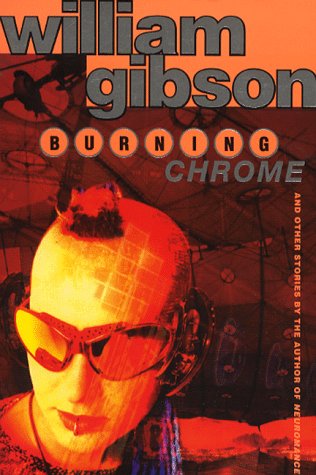
"Burning Chrome,"  William Gibson, 1982


What sort of world does “Burning Chrome” imagine will exist in the future? Who has power? Who is Chrome?


"Computer Friendly," Eileen Gunn, 1989

Why do you think that the author chose to tell this story from a young child’s point of view? How might this point of view affect the reader’s experience of this future world?


Thursday, January 29, 2015

Blog Set 5: Artificial and Post-Human Life Forms


"Reason," by Isaac Asimov, 1941

Robots are not supposed to experience emotions, yet QT often seems to do so. Also, the three laws of robotics mandate obedience to human beings, yet QT seems to flout these laws. How do you account for this apparent contradiction?


"Super-Toys Last All Summer Long," by Brian Aldiss, 1969

Science fiction stories often explore possible transformations in social relations resulting from developments in science and technology. What are some of the ways in which social relations are shaped by technology in this story?


As always, you can also reflect on our course essential questions or other connections you make with the text. Be sure to elevate your response above comprehension level.

Wednesday, January 28, 2015

Free Movie Nights!

The A.S. in Film Production is hosting six movie nights this semester.

All films are on Monday nights, from 6-8 p.m., in Building 3, room 100.

The line up is:

2/2     Metropolis          Metropolis Trailer


2/16    The Shining      The Shining Trailer


3/16    Invasion of the Body snatchers      Invasion of the Body Snatchers Trailer


3/30     Open City
4/13     Some Like it Hot
4/27     Memento

I've linked to the trailers for the ones that are applicable to our class.

Did I mention the free popcorn? Hope to see you there!

Tuesday, January 27, 2015

Thursday, January 22, 2015

Blog Set 4

H.G. Wells, "The Star," 1897


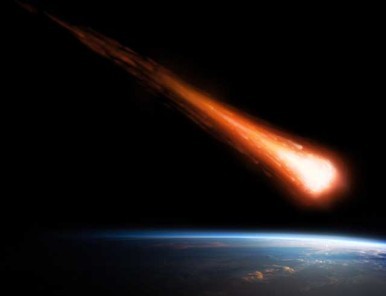
The basic plot of “The Star” has been used many times, from Wells’s own day, to modern films like Meteor, Armageddon, and Deep Impact, all the way to contemporary scientific speculations about how to defend against errant asteroids. What is the appeal of such stories about objects in space threatening the Earth?


Ocatavia Butler, "Speech Sounds," 1983
 How does the dystopic near future of the story comment on the state of the world now?