Thursday, January 29, 2015

Blog Set 5: Artificial and Post-Human Life Forms


"Reason," by Isaac Asimov, 1941

Robots are not supposed to experience emotions, yet QT often seems to do so. Also, the three laws of robotics mandate obedience to human beings, yet QT seems to flout these laws. How do you account for this apparent contradiction?


"Super-Toys Last All Summer Long," by Brian Aldiss, 1969

Science fiction stories often explore possible transformations in social relations resulting from developments in science and technology. What are some of the ways in which social relations are shaped by technology in this story?


As always, you can also reflect on our course essential questions or other connections you make with the text. Be sure to elevate your response above comprehension level.

Wednesday, January 28, 2015

Free Movie Nights!

The A.S. in Film Production is hosting six movie nights this semester.

All films are on Monday nights, from 6-8 p.m., in Building 3, room 100.

The line up is:

2/2     Metropolis          Metropolis Trailer


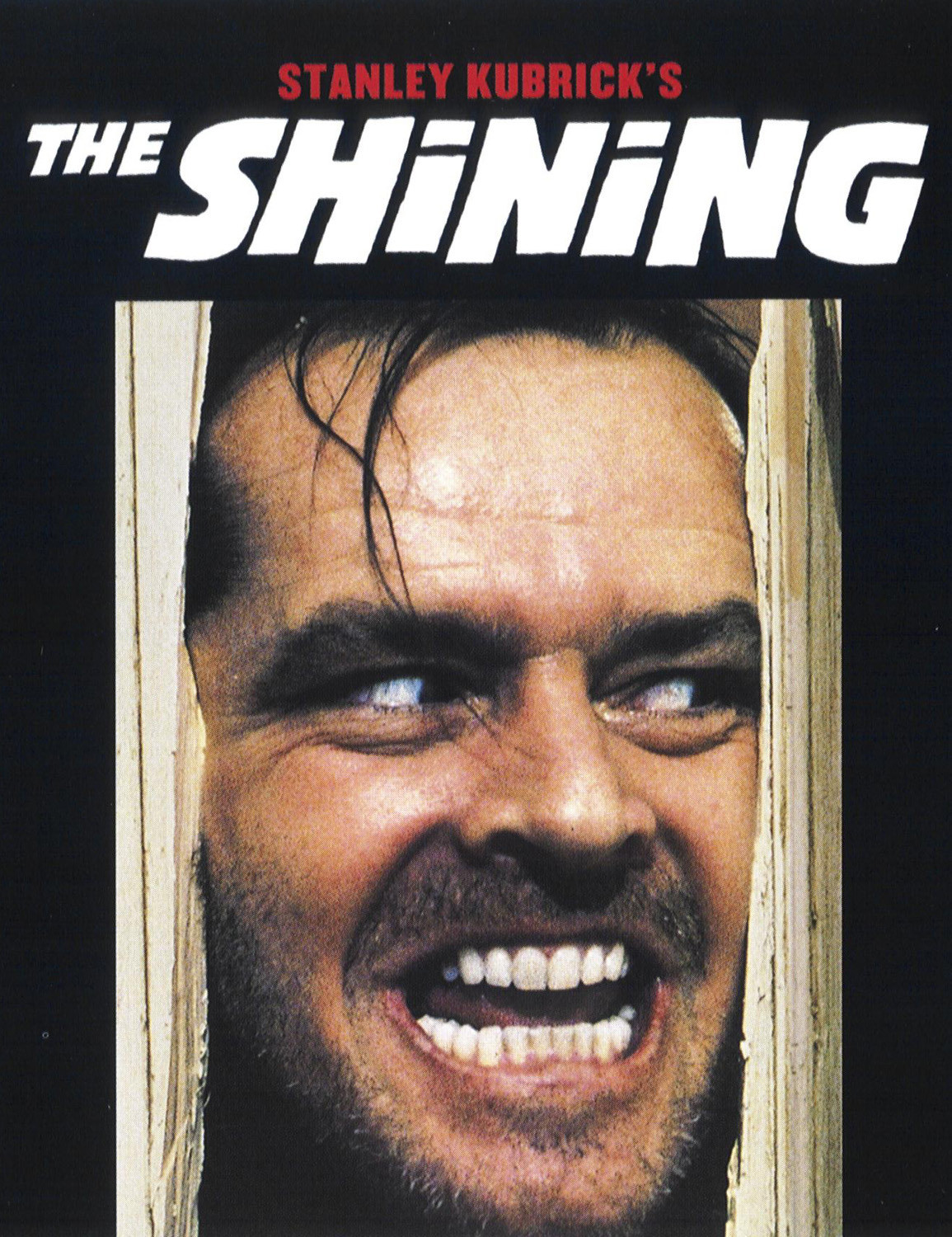
2/16    The Shining      The Shining Trailer


3/16    Invasion of the Body snatchers      Invasion of the Body Snatchers Trailer


3/30     Open City
4/13     Some Like it Hot
4/27     Memento

I've linked to the trailers for the ones that are applicable to our class.

Did I mention the free popcorn? Hope to see you there!

Tuesday, January 27, 2015

Thursday, January 22, 2015

Blog Set 4

H.G. Wells, "The Star," 1897


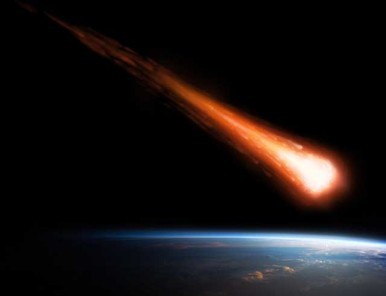
The basic plot of “The Star” has been used many times, from Wells’s own day, to modern films like Meteor, Armageddon, and Deep Impact, all the way to contemporary scientific speculations about how to defend against errant asteroids. What is the appeal of such stories about objects in space threatening the Earth?


Ocatavia Butler, "Speech Sounds," 1983
 How does the dystopic near future of the story comment on the state of the world now?

Thursday, January 15, 2015

Blog Set #3

In addition to our course essential questions and your own reader response, you can also reflect on the following questions for this week's readings: 

"That Only a Mother" by Judith Merril
The story’s setting (a modest middle-class home) is very different from most science fiction locales. How does the world of science/technology impinge on this domestic landscape?

"We See Things Differently"by Bruce Sterling
How can we tell that the near-future America depicted in this story is in economic and social decline? What global events have led to this “gloom-and-doom” situation? 


Remember that both stories need to be addressed. You can address them individually or put them in conversation with each other or other stories. 

A note about comments: Remember that comments should add value to the post. It is an on-going conversation, and your job is to keep that conversation going. 

Academic Websites of Interest

Horror Writers Assoc.
Science Fiction Writers Assoc.
Professional site devoted to Sci Fi
The International Assoc. for the Fantastic in the Arts

Tuesday, January 13, 2015

Questions to Help You Blog

You can choose one or more of the following questions to address in your weekly blog:

1. Science fiction often explores alternative belief systems (religious, philosophical, political, etc.) or the impact on current ideologies of various futuristic changes or alien ideologies. Discuss this point with reference to any two of the above texts. How are our opinions and beliefs linked to social and/or technological systems? What happens when alien or opposed ideologies come into confrontation or conflict? How do sf texts reflect “conservative” tendencies (salvaging or recuperating settled norms of belief) and how do they suggest “radical” or “revolutionary” possibilities (the subversion or supersession of pregiven norms)?

2. Much science fiction is about technology and its impact on/in the world. Discuss this point with reference to any two of the above texts. How does the evolution of technology affect the possibilities for self-understanding and social connection? Do technologies promote specific social values and norms of behavior, or do values and behavior define and constrain technologies? What are the implications of the fusing of humans and machines in the form of cyborgs? Does technology in these stories appear to be principally a utopian or a dystopian force?

3. Science fiction imagines situations that are estranged from our world and that are also reflections of the world in which they were written. What concerns of the time and place in which it was written are reflected in a work? What present concerns do you see reflected in the work? What significant differences from the real world does the work portray and what is their metaphorical or thematic importance?

4. Science fiction is in conversation with itself. That is, each work answers back to the works written before in some way. How is each work different from previous works in the course? How is it similar to them?

5. Science fiction is as much about the formal ways in which future or alien worlds are depicted as it is with the represented content of those worlds. Discuss this point. How does the very mode of representation (word-choice, literary style, forms of textual ordering) limit or enable the sorts of worlds represented? How do sf texts incorporate information about their futures into the very fabric of their textual worlds? Does the representation of future worlds seem to demand some sort of “futuristic” method of representation?

Aliens: Resources

Back ground info:
Aliens pre-1900
Aliens 1900-1940
Aliens post-1940

Further reading and viewing on the theme:
A selective, chronological reading list
Alien Invasion Novels
Films and TV movies


Friday, January 9, 2015

Blog Sets #1 & #2


Blog Set #1: For your first blog entry, set up your welcome/introduction page. Who are you? You don't need to identify yourself by more than your first name, and you need only share as much information on-line as you're comfortable with, but give the reader some sense of what kind of reader is behind the blog. Questions you might consider: What interests you about science fiction, fantasy, or horror stories? What do you want to get out of LIT2310? What are you hoping to accomplish for the semester? What's your reading/viewing wish list?

*Email me the link to your blog!


Blog Set #2: Consider the course essential question: In what ways does science fiction reflect humanity back on itself? Using "Passengers" by Robert Silverberg and Nancy Kress' "Out of All Them Bright Stars," discuss how alien encounters are portrayed and how you interpreted the human-alien interactions. Did the background information found on p. xii-xviii help you better contextualize the story? How? What did these stories make you consider about the human condition and humanity's future? 


*Remember to post before noon on Wednesday and to read and comment on two other class blogs before our next class meeting!

The Weekly Blog Post: a How-To Guide

Weekly Blog Assignment


What makes a good blog post? For our purposes, a good blog post is one in which you use this form (public, social, informal writing) to come to new insights and understanding of the course material and how you might apply it. All of us come to knowledge through writing in different ways; over the course of the semester you’ll begin to develop your own style.  Below are some approaches I’d like to see you try throughout the semester: they’re the moves you see smart bloggers making all the time.


  • Focus on direct quotations from the text and explicate them.  What is it about it that’s confusing?  clear?  helpful?  what is it’s relationship to the essay/article as a whole?
  • Outline major points of the argument
  • Locate an outside source (website, picture, video, etc.) and link to it or embed it; explain how it helps you to understand the essay
  • Apply one text to another text—literary/cultural/experiential
  • Link to other students’ blogs and describe how those posts help you to understand a text
  • write in a different voice: how might someone else (the author, an alien, your grandma, etc.) describe the reading?

Blog posts should be at least 300 words long (about 1 typed page).  The first post of the week is due before noon on Wednesday; comments (see below) are due before 11 a.m. on Friday (please comment on the previous week’s posts, not the upcoming week’s posts).  No late posts or comments will be counted toward your grade. You might think about the Wednesday blog post as one that expresses your specific ideas about the reading we’re about to discuss  in class. Consider these questions: What sticks with you?  What did you think when you first read a quote, and how have your ideas changed?  How would you compare the readings?

Remember that although blogging is more informal and personal than academic writing, you are still expected to follow the conventions of standard, academic English. 


What about comments? Once a week, you’ll post comments to two of your classmates’ blogs. A good comment is one that engages with the author’s ideas and gives him/her something else to think about. You may be able to do this in a short paragraph, or it may take you a bit longer. 

Again, here are two guidelines: comment at least once on each author’s blog over the course of the semester *and* this is important!! Keep a list of the blogs and dates where you’ve posted comments. [a couple of ways to do this—when you comment, post the locations of those comments to your own page (e.g., “I commented on Cara W. and Sherri’s blogs today) or write one post titled “Comments” and edit it weekly (e.g., “1/25—commented at Cara W.’s and Sherri’s. 1/31—commented at Ryan’s and John’s,” etc.).  At midterm and at the end of the semester, I’ll ask you to turn in a “Check-In” that documents all of your posts and comments.


It may be helpful to view My Year of Star Trek and Critics In College to observe different ways of engaging with course material. 

Remember to check the class blog for weekly prompts. 


Thursday, January 8, 2015

Recommended Viewing

There are likely more suggestions to come, but here's a start to the recommended viewing list. Remember to check our class library page to see where you can access these shows.

Movies

Science Fiction                                                          Horror
2001: A Space Odyssey                                       Ghostbusters
Metropolis                                                            Dracula (1931)
 E.T.                                                                      The Fly
 Avatar                                                                  The Haunting (1963)
  RoboCop                                                             Dawn of the Dead (1978)
The Day the Earth Stood Still                               The Thing
Forbidden Planet                                                   An American Werewolf in London
Planet of the Apes (1968)                                      Night of the Living Dead
Mad Max                                                               The Shining
Dr. Strangelove                                                      Pyscho
Brazil (1985)                                                         The Babadook
Men In Black                                                         Invasion of the Body Snatchers
Ghost In the Shell
Terminator 
Interstellar

Fantasy 
Lord of the Rings
The Neverending Story 
The Lion, the Witch, and the Wardrobe
Ever After
Princess Bride 
The Hobbit  

TV: First Seasons
 Science Fiction                                                        Horror
Star Gate SG1                                                          Buffy the Vampire Slayer
Firefly                                                                       American Horror Story
Extant                                                       
Battlestar Galactica                                 
Roswell 
Star Trek (any of them)
Farscape
Dr. Who

Fantasy 
Once Upon A Time 
Grimm  
The Librarians

Tuesday, January 6, 2015

Welcome to Literature of the Supernatural: Science Fiction, Fantasy, and Horror

Literature of the Supernatural: Science Fiction, Fantasy, and Horror is a Broward College Lit 2310 class. LIT2310 provides a basic introduction to the related fields of science fiction, fantasy, and horror, which can all be categorized with their related branches under the general rubric of the fantastic. We will look at representative fiction, films, shows, and scholarly work for each of these categories to investigate the basic characteristics, issues, and forms that characterize them.


The course is organized around three essential questions:

  •  In what ways do science fiction, fantasy, and horror reflect humanity back on itself?    
  • How does the work conform to genre expectations? Does it bring anything new to the genre?
  • How does adaptation impact the story?


 Students on this literary journal are encouraged to blog about their experiences and thoughts as they work through the reading and viewing assignments. Check back weekly to see what's new!